
Friday evening.
Laptop closed.
Notifications off.
Tent packed.
Car fuelled.
And instead of spending another weekend inside a mall, restaurant or crowded hill station…
you’re driving towards the Sahyadris.
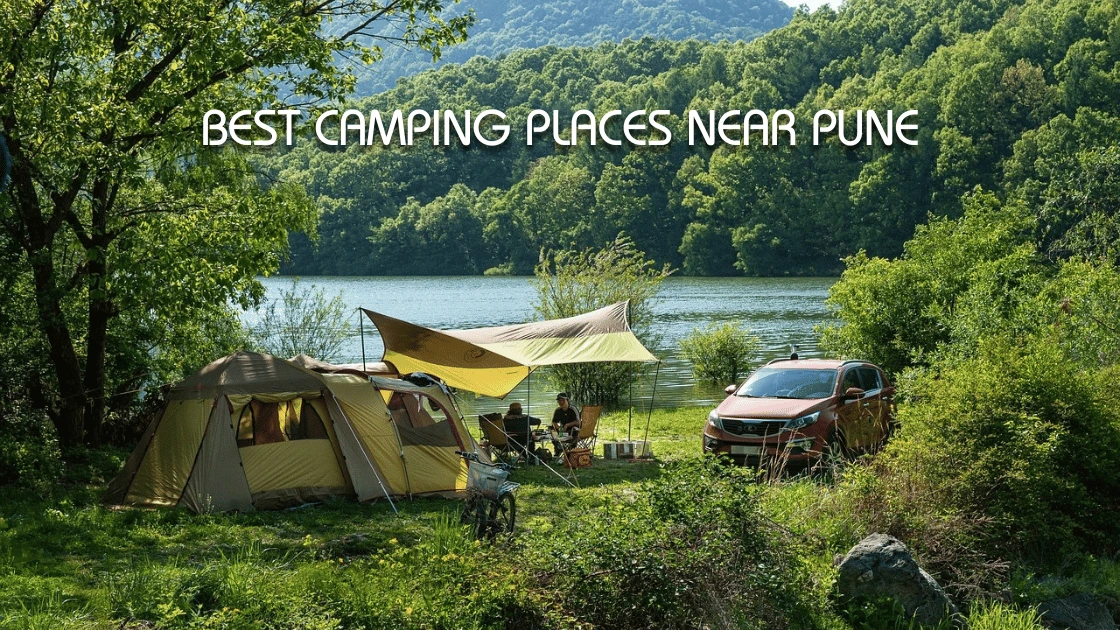
A few hours later, there’s a lake in front of you, mountains behind you, something cooking beside the tent and a sky full of stars overhead.
That’s the beauty of camping around Pune.
You don’t need a flight.
You don’t need a week of leave.
And you don’t necessarily need an expensive resort.
Pune’s location near the Western Ghats gives travellers access to lakes, forts, forests, dams, mountains and countryside within a relatively short drive.
But where should you actually camp?
Pawna?
Panshet?
Bhandardara?
Mulshi?
Somewhere completely offbeat?
Welcome to INTO THE WILD, a new Travel Addicted series about camping, outdoor equipment, road trips and getting closer to nature.
And we’re beginning at home.
Here are some of the best camping destinations around Pune.
1. Pawna Lake — The Classic Pune Camping Weekend
Best for: First-time campers, couples, groups of friends
If you live in Pune and someone says:
“Let’s go camping this weekend.”
Pawna is probably one of the first names you’ll hear.
And there’s a reason.
Pawna Lake combines three things extremely well:
Accessibility.
Lake views.
A large selection of organised camps.
Maharashtra Tourism describes Pawna as one of the state’s popular camping destinations, known for lakeside views, bonfires and barbecue-style camping experiences. It identifies October to March as the most pleasant camping period.
Why Pawna Works So Well for Beginners
You don’t necessarily need your own tent.
You don’t need camping equipment.
You don’t need to know how to cook outdoors.
Numerous organised operators around the reservoir provide ready-made camping experiences.
A typical package may include:
Tent accommodation.
Evening snacks.
Dinner.
Breakfast.
Music or entertainment.
Bonfire where permitted and conditions are safe.
Basic games.
Lake views.
The exact inclusions vary significantly between operators, so always check before booking.
This makes Pawna less like wild camping and more like an easy introduction to sleeping outdoors.
And for many people?
That’s exactly what they need.
What Makes Pawna Special?
The lake is surrounded by some of the Sahyadris’ best-known historical landscapes.
Depending on your campsite and visibility, the wider Pawna region connects naturally with places such as:
Tikona Fort
Tung Fort
Lohagad
Visapur
Maharashtra Tourism specifically highlights Pawna Lake alongside the Lonavala region’s forts and outdoor attractions.
So don’t make Pawna only about arriving at 5 PM, eating barbecue and leaving after breakfast.
Turn it into a proper weekend.
Travel Addicted Pawna Plan
Saturday
2:00 PM — Leave Pune
4:30 PM — Reach campsite
5:00 PM — Tea + lake walk
6:15 PM — Sunset
7:30 PM — Bonfire/activities where permitted
9:00 PM — Dinner
10:30 PM — Stargazing / conversations
Sunday
6:30 AM — Wake up
7:00 AM — Lake sunrise
8:30 AM — Breakfast
10:00 AM — Checkout
Then combine the return journey with a nearby fort, cave or Lonavala stop depending on the season and your energy.
Pawna’s Biggest Problem
Popularity.
Weekend camping can become crowded.
Some camps play loud music.
Tents may be positioned close together.
And the experience can sometimes feel more like an outdoor party than peaceful camping.
So before booking, ask:
How many tents does the campsite have?
How far apart are they?
Is loud music played at night?
Are washrooms private or common?
Are families and party groups separated?
Exactly where is the campsite?
Two Pawna camps can offer completely different experiences.
If your goal is silence, don’t book only by looking at the cheapest Instagram advertisement.
2. Panshet — The Convenient Escape From Pune
Best for: Short weekend breaks, families, first-time campers
If your biggest priority is reducing driving time, Panshet deserves serious consideration.
Maharashtra Tourism places Panshet roughly 50 km from Pune and describes the reservoir as a nature and adventure escape surrounded by Western Ghats scenery.
That makes it particularly useful when you don’t want half your weekend disappearing on the highway.
Leave Pune after lunch.
Reach the area by evening.
Camp.
Wake up beside the backwaters.
Return the next day.
Simple.
Why Choose Panshet?
Panshet gives you a good combination of:
Backwater scenery.
Green hills.
Shorter driving distance.
Outdoor activities.
Family-friendly weekend potential.
Maharashtra Tourism highlights activities around Panshet including kayaking, boating and other water sports, subject to local operations and conditions.
For travellers who want camping without travelling several hours into Maharashtra, this is a major advantage.
Best Season for Panshet
Monsoon turns the entire landscape green.
But green doesn’t automatically mean ideal camping weather.
Heavy rain, slippery terrain, water levels and storms can complicate tent camping.
For more comfortable camping, the cooler post-monsoon and winter months are easier.
Maharashtra Tourism specifically identifies October to February as a good period for camping, trekking and water sports around Panshet.
3. Bhandardara — The Best Camping Road Trip
Best for: Nature lovers, photographers, couples, stargazing and longer weekends
If Pawna is the easy camping weekend…
Bhandardara feels more like a journey.
Located farther from Pune, Bhandardara sits among some of Maharashtra’s most dramatic Sahyadri scenery.
The heart of the landscape is Arthur Lake.
Forests.
Mountains.
Waterfalls.
Forts.
And during certain periods, something magical.
Fireflies.
Maharashtra Tourism actively promotes Bhandardara for lakeside camping and notes that the pre-monsoon period around May–June is associated with firefly viewing.
Why Bhandardara Is Worth the Longer Drive
This isn’t somewhere I’d visit merely to sleep in a tent.
Build a complete weekend around it.
Nearby attractions include:
Arthur Lake
Wilson Dam
Randha Falls
Umbrella Falls in suitable seasonal conditions
Ratangad
Amruteshwar Temple
Kalsubai region
Maharashtra Tourism identifies Arthur Lake as a camping and boating destination and highlights Bhandardara’s surrounding waterfalls and trekking attractions.
This means Bhandardara works brilliantly for travellers who want:
Road trip + camping + trekking + photography.
The Bhandardara Firefly Experience
This deserves separate attention.
During the period before the full monsoon arrives, certain areas around Bhandardara become known for firefly activity.
Maharashtra Tourism’s 2025 traveller newsletter described the Bhandardara Firefly Festival period as roughly mid-May to early June.
But please treat this responsibly.
Fireflies aren’t a light show scheduled for tourists.
They’re living creatures.
Don’t:
Blast bright lights at them.
Catch them.
Use flash photography repeatedly.
Play loud music in sensitive areas.
Damage vegetation.
Or expect guaranteed sightings because somebody sold you a “firefly package.”
Nature doesn’t offer refunds for cloudy skies or fewer fireflies.
Visit for the ecosystem.
Consider the fireflies a privilege.
Travel Addicted Bhandardara Plan
Saturday
6:00 AM — Leave Pune
Breakfast en route.
Late morning — Reach Bhandardara region
Explore Arthur Lake / local attractions.
Lunch.
Afternoon — Relax.
4:00 PM — Reach campsite.
Sunset.
Dinner.
Stargazing / seasonal firefly experience.
Sunday
Early wake-up.
Sunrise.
Breakfast.
Choose one main activity:
Ratangad area.
Waterfalls in suitable season.
Amruteshwar Temple.
Or a relaxed Bhandardara drive.
Then return to Pune.
Bhandardara deserves more time than Pawna.
Don’t arrive late Saturday night and leave at 8 AM Sunday.
You’ll miss the destination.
4. Mulshi — Green Hills and Backwater Views
Best for: Couples, families, relaxed nature weekends
Mulshi is another natural choice for Pune travellers.
Maharashtra Tourism includes Mulshi Lake among the state’s camping destinations.
And Mulshi’s appeal isn’t difficult to understand.
It’s relatively accessible from Pune.
The landscape changes dramatically during and after monsoon.
There are hills, water and countryside roads.
And there are numerous stays, farms and outdoor experiences throughout the broader Mulshi region.
Who Should Choose Mulshi?
Choose Mulshi if your ideal weekend is:
Drive slowly.
Stop for breakfast.
Reach a peaceful property.
Spend time outdoors.
Watch sunset.
Have dinner.
Sleep.
Wake up without an alarm.
Have tea looking towards the hills.
Return home.
Not every camping trip needs ten activities.
Sometimes doing almost nothing is exactly the activity you need.
5. Varasgaon — For Travellers Who Want Something Quieter
Best for: Quiet weekends, photography, couples
If Panshet feels too familiar, look towards the broader Panshet–Varasgaon landscape.
Maharashtra Tourism describes Varasgaon Dam near Panshet as a peaceful reservoir environment suited to activities including camping, birdwatching and photography.
The attraction here isn’t a giant checklist.
It’s space.
Water.
Hills.
Silence.
This is the kind of destination I’d choose when the objective is escaping the city rather than attending an organised camping event.
However, quieter locations require more responsibility.
Never assume that an empty patch of land beside a reservoir is automatically legal or safe for camping.
Use authorised/private camping properties or obtain the necessary permission.
6. Rajmachi — Camping for Trekkers
Best for: Trekking groups and adventure travellers
Now we’re changing the definition of camping.
Rajmachi isn’t about driving your car beside a tent and opening a packet of barbecue snacks.
This is trekking + camping territory.
Maharashtra Tourism identifies Rajmachi Fort among Maharashtra’s notable trekking destinations.
The fort region sits among classic Sahyadri landscapes, and the experience becomes especially dramatic during the monsoon and immediately afterwards.
Think:
Mist.
Green valleys.
Trails.
Fort ruins.
Clouds.
Rain.
And tired legs.
For adventure travellers, this is much closer to what camping means:
You earn the view.
7. Tikona–Pawna Region — Camp + Trek Combination
Best for: Beginners who want camping plus a short adventure
If you’re already camping around Pawna, why not add a trek?
Tikona Fort rises dramatically above the surrounding region and can be combined with a Pawna weekend.
This gives you two completely different experiences.
Saturday:
Relax beside the lake.
Sunday:
Climb.
Or reverse it.
Trek first.
Then reach your campsite, eat, relax and let your legs recover beside the water.
This is one of my favourite ways of designing short camping trips:
Don’t make the tent the entire destination.
Combine camping with something.
A trek.
Kayaking.
Cycling.
Photography.
Birdwatching.
A fort.
A village.
A road trip.
Then the weekend becomes a story rather than simply an overnight stay.
8. Lohagad–Pawna Circuit
Best for: History + trekking + camping
Another easy combination is:
Lohagad + Pawna.
Maharashtra Tourism describes Lohagad as a trekking destination with panoramic surroundings and places Pawna Lake among the area’s nearby nature attractions.
This works especially well for people introducing friends or older children to outdoor travel.
You don’t need to begin with an extreme wilderness expedition.
Start with:
A manageable trek.
A comfortable organised campsite.
A proper washroom.
Food.
A tent.
And a beautiful morning.
If they enjoy that?
Then upgrade the adventure next time.
9. Tapola — When You Have a Longer Weekend
Best for: Road trips, kayaking, peaceful camping
Tapola isn’t as close to Pune as Panshet or Pawna.
But if you have two nights instead of one, it becomes much more interesting.
Located near Mahabaleshwar around the Koyna backwaters, Maharashtra Tourism promotes Tapola for boating, kayaking and lakeside camping.
This is where I would draw an important distinction.
Don’t drive several hours merely to recreate the exact same tent + DJ + barbecue experience you can get much closer to Pune.
If you’re going farther…
look for a better outdoor experience.
Kayak.
Explore the backwaters.
Stay longer.
Slow down.
Make the distance worthwhile.
10. Your Own Campsite — The Next Level
Eventually, organised camping may not be enough.
You’ll start thinking:
What if we carry our own tent?
Our own chairs?
Our own stove?
Our own lights?
Our own sleeping system?
That’s when camping becomes genuinely addictive.
But there’s an important rule.
Wild Camping Doesn’t Mean Camping Wherever You Want
Land has owners.
Forests have regulations.
Reservoir zones can have restrictions.
Wildlife areas have rules.
Fire can create enormous risks.
And water levels can change.
Never pitch a tent simply because a location looked empty on Google Maps.
Use legal campsites, private land with permission, designated areas or locations where the relevant authority explicitly permits camping.
The objective isn’t:
“Nobody caught us.”
The objective is:
Responsible outdoor travel.
Pawna vs Panshet vs Bhandardara
So which one should you choose?
Choose PAWNA if…
It’s your first camping trip.
You want lots of organised campsite options.
You’re going with friends.
You want an easy overnight experience.
You want to combine camping with Lonavala/Tikona/Lohagad.
Choose PANSHET if…
You want to stay relatively close to Pune.
You’re travelling with family.
You only have Saturday afternoon to Sunday.
You want water activities where available.
You don’t want a long road trip.
Choose BHANDARDARA if…
The journey itself matters.
You love landscapes and photography.
You have a full weekend.
You want trekking possibilities.
You want a quieter Sahyadri experience.
You’re interested in the seasonal firefly phenomenon.
If I had to simplify it:
Easiest: Pawna
Closest/easiest short escape: Panshet
Best complete nature weekend: Bhandardara
But “best” depends entirely on the kind of camping experience you’re looking for.
Best Time to Camp Near Pune
October to February — Best Overall
This is the easiest season for beginners.
Cooler nights.
Lower rainfall.
Better outdoor comfort.
And pleasant mornings.
Maharashtra Tourism specifically identifies October–March for Pawna and October–February for camping/outdoor activities around Panshet.
March to May — Possible, But Hot
Choose shaded camps.
Reach later in the afternoon.
Carry enough water.
Avoid sitting exposed to the sun.
Nights can still be enjoyable depending on the location.
May–June — Firefly Season
Bhandardara becomes particularly interesting during the pre-monsoon firefly period.
June to September — Spectacular But Complicated
The Sahyadris become unbelievably beautiful during monsoon.
But camping becomes more challenging.
Waterproofing.
Mud.
Slippery terrain.
Wind.
Lightning.
Rising water levels.
Flash flooding in certain terrain.
Leeches in some environments.
And limited outdoor activity during severe weather.
Beginners shouldn’t confuse:
beautiful weather
with
safe camping weather.
Always check the forecast and local conditions.
What Should Beginners Pack?
If your campsite provides the tent and bedding, you still need a small personal camping kit.
Carry:
Quick-dry clothes.
Light jacket.
Rain protection according to season.
Trekking/walking shoes.
Extra socks.
Torch or headlamp.
Power bank.
Reusable water bottle.
Personal medicines.
Basic first aid.
Insect repellent.
Sunscreen.
Cap.
Small towel.
Personal toiletries.
Trash bags.
And a small backpack.
Avoid bringing a giant suitcase to a campsite.
Camping is one of those situations where packing less often makes the experience better.
If You’re Carrying Your Own Tent
Now your list expands.
You’ll need to think about:
Tent.
Groundsheet.
Sleeping mat.
Sleeping bag or appropriate bedding.
Camping chairs.
Lighting.
Cooking system.
Food.
Water storage.
Power.
Waste management.
Emergency kit.
Weather protection.
And possibly a portable table.
Don’t buy everything immediately.
Your first camping setup doesn’t need to look like an outdoor-equipment showroom.
Start with essentials.
Use them.
Learn what annoys you.
Then upgrade.
A ₹20,000 piece of equipment you never use is worse than a ₹2,000 piece of equipment that joins you on twenty trips.
Campfire Safety
A camping trip does not automatically require a campfire.
During dry or windy conditions, fire can spread frighteningly quickly.
Only light fires where explicitly permitted.
Use designated fire areas.
Keep water or an extinguisher available.
Never leave fire unattended.
Fully extinguish it before sleeping.
And never create a fire simply because:
“Camping photo achha aayega.”
Nature doesn’t care about your Instagram feed.
Camping With Children
Camping can be one of the best ways to introduce children to outdoor travel.
But start easy.
For a child’s first camp, I’d choose an organised property relatively close to Pune rather than a remote wild campsite.
Look for:
Clean washrooms.
Safe drinking water.
Secure campsite boundaries.
Easy vehicle access.
Reasonable distance to medical assistance.
Proper sleeping arrangements.
Safe distance from deep water.
Low noise.
And family-friendly management.
Let the first experience be fun.
You can make it adventurous later.
Leave No Trace
If you carried it into nature…
carry it out.
Plastic bottles.
Food packets.
Tissues.
Cans.
Disposable plates.
Everything.
Don’t burn plastic.
Don’t throw waste into lakes.
Don’t leave bottles around a campfire.
Don’t carve names into trees.
Don’t blast music across a quiet valley at midnight.
And don’t assume the campsite operator will magically make your garbage disappear responsibly.
The best campers leave almost no evidence that they were there.
Travel Addicted’s Perfect Beginner Camping Weekend
If someone from Pune asked me:
“I’ve never camped before. What should I do?”
I’d keep it extremely simple.
Choose an organised campsite around Pawna or Panshet.
Go during the cooler months.
Reach before sunset.
Carry a small personal bag.
Don’t overplan activities.
Spend time outdoors.
Watch sunset.
Put your phone away for an hour.
Eat.
Talk.
Look at the sky.
Sleep in the tent.
Wake up early.
Watch sunrise.
Have breakfast.
Then combine the return journey with one small trek or attraction.
That’s enough.
Because the objective of your first camping trip isn’t proving how adventurous you are.
It’s discovering whether you enjoy being outdoors.
And if you do…
you’ll be back.
Probably with your own tent next time.
Frequently Asked Questions
Which is the best camping place near Pune for beginners?
Pawna and Panshet are among the easiest options because they’re relatively accessible and have organised camping infrastructure.
Which camping destination near Pune is best for couples?
Pawna, Mulshi, Panshet and Bhandardara can all work. For couples seeking more peace, prioritise smaller camps with fewer tents rather than choosing only by destination.
Where can I camp near Pune with family?
Panshet, Pawna and organised properties around Mulshi are practical starting points. Verify washrooms, security, food and water access before booking.
Is Pawna camping worth it?
Yes, particularly for first-time campers, but experiences vary enormously between operators. Check campsite size, noise policy, washrooms, exact location and inclusions before booking.
Which is better, Pawna or Bhandardara?
Pawna is easier for a quick overnight camping experience. Bhandardara works better as a complete road-trip and nature weekend.
Can we camp anywhere near a lake?
No. An open-looking lakeside area isn’t automatically public or approved for camping. Check land ownership, local restrictions and safety before pitching a tent.
Is camping near Pune safe during monsoon?
Conditions can become hazardous due to heavy rain, lightning, slippery terrain, strong winds and changing water levels. Check weather warnings and local conditions and avoid exposed or flood-prone camping areas during severe weather.
When is the best camping season around Pune?
For most beginners, the cooler post-monsoon and winter period from roughly October through February/March provides the easiest conditions.
Final Thoughts
Maybe the best thing about camping isn’t the tent.
Or the lake.
Or even the stars.
It’s the change in pace.
At home, you wake up and check your phone.
At camp, you wake up and unzip the tent.
There’s a mountain outside.
Or a lake.
Or fog.
Someone is making tea.
Your shoes are covered in mud.
Your phone has almost no signal.
And somehow…
you don’t care.
That’s what we’re going to explore with INTO THE WILD.
Not just where to camp.
But how to camp.
What to carry.
What equipment is actually useful.
How to cook outdoors.
How to camp with children.
How to create your own setup.
And eventually…
how to stop booking the tent…
and start carrying your own.
INTO THE WILD #01
Pitch the tent. Light the stove. Leave the city behind.
Camping access, private-property rules, reservoir restrictions, weather, fire rules and operator services can change. Verify current local permissions and safety conditions before travelling.